





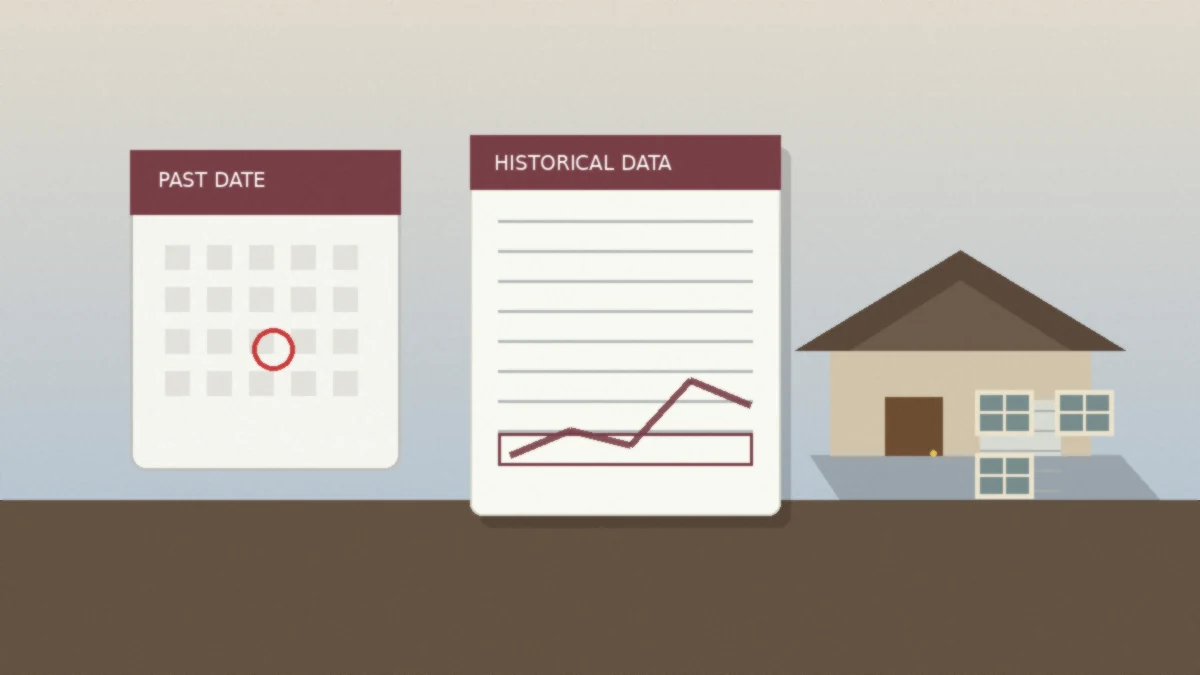
A retrospective property valuation establishes what a property was worth at a specific date in the past — not what it is worth today. In Western Australia, this type of valuation is required in a range of legal and tax situations where the historic value of a property is legally or financially critical: capital gains tax events, deceased estate administration, family law proceedings, stamp duty disputes, and compulsory acquisition compensation matters.
Western Australia's property market has been one of Australia's most cyclical — driven by booms and busts in the resources sector that produce dramatic price movements in both the Perth metropolitan market and regional WA. This cyclicality makes the date at which a property is valued enormously consequential. A Perth house valued in 2012 at the peak of the resources boom would be worth far less in 2017, and significantly more again by 2024. Establishing the value at the right date — accurately and with proper documentation — is essential.
This guide explains what retrospective property valuations are, when you need one in WA, how they are prepared, and what to look for when commissioning one.
What Makes a Valuation "Retrospective" in WA?
In valuation practice, "retrospective" means the valuation date is fixed in the past. The licensed WA valuer must assess what the property would have sold for at that earlier date — using evidence that was available at or before that date. No current market data can be used. The valuer accesses Landgate's historical sales records, historical market data from the Real Estate Institute of Western Australia (REIWA) and other sources, and property condition evidence from the relevant period.
The result is a formal written report — certified by the licensed WA valuer with their licence number and signature — stating the assessed market value as at the nominated past date. This report carries the same professional accountability as a current-date report. It is accepted by the ATO, the Western Australian State Revenue, and Western Australian courts as formal evidence of historical market value.
WA's specific market dynamics — the Pilbara mining boom and bust cycle, the Perth metropolitan market's sensitivity to iron ore prices, and the distinct behaviour of WA's agricultural and pastoral markets — mean that retrospective valuations in WA require valuers with genuine knowledge of Western Australian historical market conditions, not just general valuation expertise.
When Do You Need a Retrospective Valuation in Western Australia?
Capital Gains Tax Events
CGT is the most common driver of retrospective valuations in WA. Common scenarios include: establishing the market value of a pre-CGT property (acquired before 20 September 1985) as at that date; establishing the value of a Perth or WA property at the date it first became income-producing (when an owner moved out and began renting it); and establishing the value of inherited property at the date of death.
WA's resource-driven market cycles create specific retrospective CGT challenges. A homeowner who lived in a Karratha property during the mining boom, then moved away and rented it out as values collapsed, and later sold, faces a complex CGT calculation that depends critically on the value at the date the property first became income-producing. A formal retrospective valuation from a licensed WA valuer is the only defensible basis for this figure.
Deceased Estates in Western Australia
When a Western Australian property owner passes away, the estate is administered through the Supreme Court of Western Australia's Probate Office. Property assets must be valued as at the date of death for the application for probate or letters of administration. This is always a retrospective valuation — by the time the estate is administered, the relevant date has passed.
In WA, where property values can move dramatically over relatively short periods, the gap between the date-of-death value and the current value can be substantial. Only the date-of-death value is relevant for probate and CGT purposes — not what the property is worth when the estate is finally administered.
Family Law Proceedings in WA
In Western Australian family law matters, retrospective property values at the date of separation, the date of marriage, or another reference point may be needed to assess contributions made during the relationship. For long-running matters — where WA's market may have moved significantly in either direction since separation — a retrospective valuation can be a critical piece of evidence.
WA Stamp Duty (Transfer Duty) Disputes
Western Australia's transfer duty is assessed on the dutiable value of the property at the date of the transaction. Where the WA State Revenue has issued a reassessment alleging an understatement of value, a retrospective valuation establishing the market value at the transaction date is the primary evidence in support of an objection.
Compulsory Acquisition in WA
When the State of Western Australia or a statutory authority (Main Roads WA, Water Corporation, a local government) acquires private property, compensation is assessed by reference to market value at the date of acquisition. Where the acquisition date is in the past, a formal retrospective valuation establishes the historical value for compensation purposes. Compulsory acquisition valuations in WA are governed by the Land Administration Act 1997 (WA) and require specific expertise in this specialist field.
How Retrospective Valuations Are Prepared in WA
The methodology follows the same approach as a current-date valuation — Direct Comparison for residential properties, Income Capitalisation for commercial — but applied exclusively to historical evidence. The WA valuer accesses Landgate historical sales records to identify comparable transactions from around the retrospective date, assesses WA market conditions at that time, and documents the comparable evidence and adjustments in the report.
For WA regional and Pilbara properties, the retrospective evidence base can be particularly challenging — some WA regional markets have thin evidence even in current-date valuations, and historical evidence from periods of boom-bust cycles may be dominated by distressed sales or inflated speculative transactions that require careful interpretation. This is where deep knowledge of Western Australian regional property markets, particularly the Pilbara and Kimberley, is essential.
Frequently Asked Questions
Is there such a thing as a free retrospective property valuation in WA?
No formal retrospective valuation that carries professional accountability and can be used for legal, tax, or lending purposes is ever genuinely free. Some online tools may generate historical value estimates using automated algorithms, but these are not retrospective valuations in any professional or legal sense — they lack physical inspection, expert comparable evidence analysis, and professional accountability. For any purpose where the historical value will be relied upon formally, a licensed WA valuer must be engaged. There is no shortcut that produces a defensible, professional retrospective opinion without a professional fee.
How much does a retrospective property valuation cost in Perth?
Retrospective valuations typically cost more than current-date valuations of equivalent properties, because of the additional time required for historical research — accessing Landgate historical records, identifying comparable sales from the relevant period, and establishing historical condition evidence. The exact fee depends on the property type, the retrospective date, and the purpose. Contact a licensed WA valuation firm with the property details and the relevant date for an upfront quote.
Does the ATO accept retrospective valuations from WA valuers?
Yes — the ATO accepts retrospective valuations prepared by qualified, independent valuers who hold a current state licence. For WA properties, the valuer must hold a current licence under the Land Valuers Licensing Act 1978 (WA). The report must meet the ATO's documentation standards: licensed valuer, no conflict of interest, historical comparable evidence from Landgate records, documented methodology, and a clearly stated retrospective date. Your accountant should confirm the specific requirements for your situation.